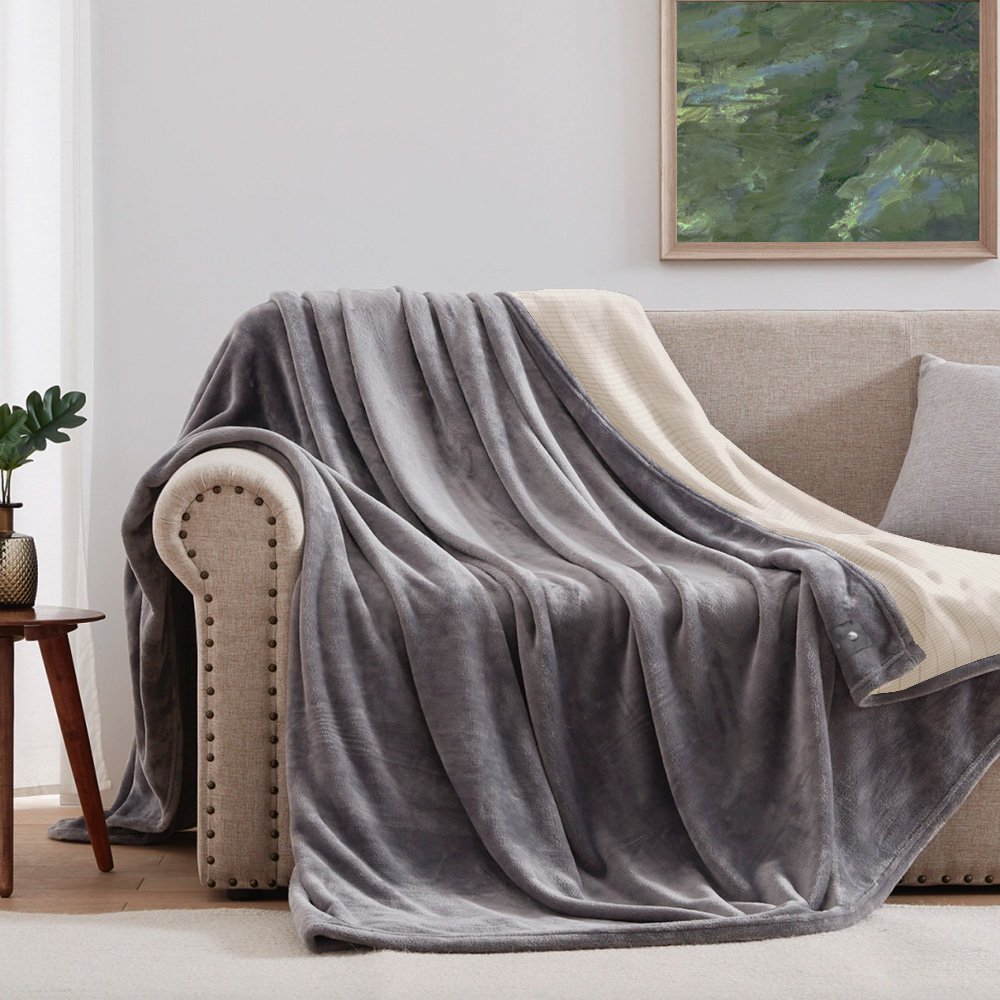
Develop a blanket collection
Grounding Blanket Sourcing: An OEM Buyer’s Guide
Approve the outer textile, conductive construction and finished size together. Then confirm the connector, care instructions and complete retail pack.
Read the full sourcing overview
Grounding blanket sourcing requires more than selecting a soft textile and adding a grounding connection.
For bedding brands, wellness companies, distributors, importers, and private-label businesses, a successful grounding blanket project requires careful consideration of conductive materials, product construction, testing methods, accessories, packaging, and production quality.
Compared with smaller grounding accessories, blankets involve a larger textile area and more complex manufacturing considerations.
A complete grounding blanket system may include:
Conductive Textile
→
Blanket Construction
→
Connection Point
→
Grounding Cord
→
Regional Accessory
For wholesale buyers, choosing the right grounding blanket manufacturer is not only about production capacity. It is also about whether the supplier can maintain consistent materials, conductive performance, customization options, and repeat-order quality.
Quick Answers for Grounding Blanket Buyers
Open the five-question buyer checklist
| Buyer Question | Quick Answer |
|---|---|
| What materials are used in grounding blankets? | Confirm the outer textile, conductive construction and any backing or fill for the quoted model, with verified fiber names and composition records. |
| How should grounding blankets be tested? | Buyers should evaluate the finished blanket, conductive surface, connector, cord, and complete connection system. |
| Is a grounding blanket different from a grounding sheet? | Yes. Blankets and sheets have different structures, applications, production requirements, and market positioning. |
| Can grounding blankets be private labeled? | OEM projects can include custom materials, sizes, colors, labels, packaging, accessories, and branding. |
| What should buyers check before bulk production? | Materials, conductivity, workmanship, accessories, packaging, sample approval, and quality control requirements. |
A professional grounding blanket sourcing process starts before production begins.
1. What Is a Grounding Blanket and How Does It Work?
Direct answer:
A grounding blanket is a textile product designed with conductive materials integrated into the fabric structure and connected through a grounding system.
For wholesale buyers, the product should be viewed as a complete system rather than only a blanket.
A typical structure includes:
Conductive Textile
↓
Finished Blanket Construction
↓
Connector Installation
↓
Grounding Cord
↓
Compatible Grounding Connection
The conductive textile is the foundation of the product.
However, production consistency also depends on:
- Material quality
- Conductive fiber distribution
- Sewing process
- Connector installation
- Cord quality
- Final inspection
Why Brands Add Grounding Blankets to Their Product Line
For bedding and wellness brands, grounding blankets can provide another product category beyond:
A broader product range allows brands to serve different customer needs and price levels.
| Product | Possible role to evaluate |
|---|---|
| Grounding Pillowcase | Complementary pillow format |
| Grounding Sheet | Bedding format |
| Grounding Blanket | Draped or covering textile format |
| Grounding Mat | Desk, floor or other defined placement |
Brands developing a complete collection can also review:
Grounding Pillowcase Sourcing Guide
2. Which materials and layers belong in the blanket specification?
Start with the complete construction offered for your order. Identify the outer textile, the conductive textile or yarn arrangement, and any backing, lining or fill. Ask which face the customer is intended to contact and how that face connects to the specified snap and cord.
Record the composition basis for each material statement. A percentage stated for an inner conductive fabric describes that fabric. Ask the supplier to reconcile it with the construction and fiber disclosure for the finished blanket before using it in the retail listing.
Compare cotton and verified bamboo-derived textiles on the sample
Compare the proposed fabrics for feel, weight, appearance, care requirements and the intended coverage. A material name alone cannot establish that one finished blanket will feel softer, cost less or deserve a higher retail price.
The FTC guidance on bamboo textiles calls for accurate identification of the finished fiber and substantiation of claims. When the actual fiber is rayon made from bamboo, use the verified generic description. Check evidence for environmental or antimicrobial claims before approving them. For the broader base-fabric comparison, see our cotton and bamboo-derived textile guide.
Keep the construction record usable for inspection
Keep a layer sketch, material descriptions, approved color, finished size and tolerance, edge construction, intended use-face photographs and connector position with the sample ID. Have the supplier identify which components and revisions its material and test records cover.
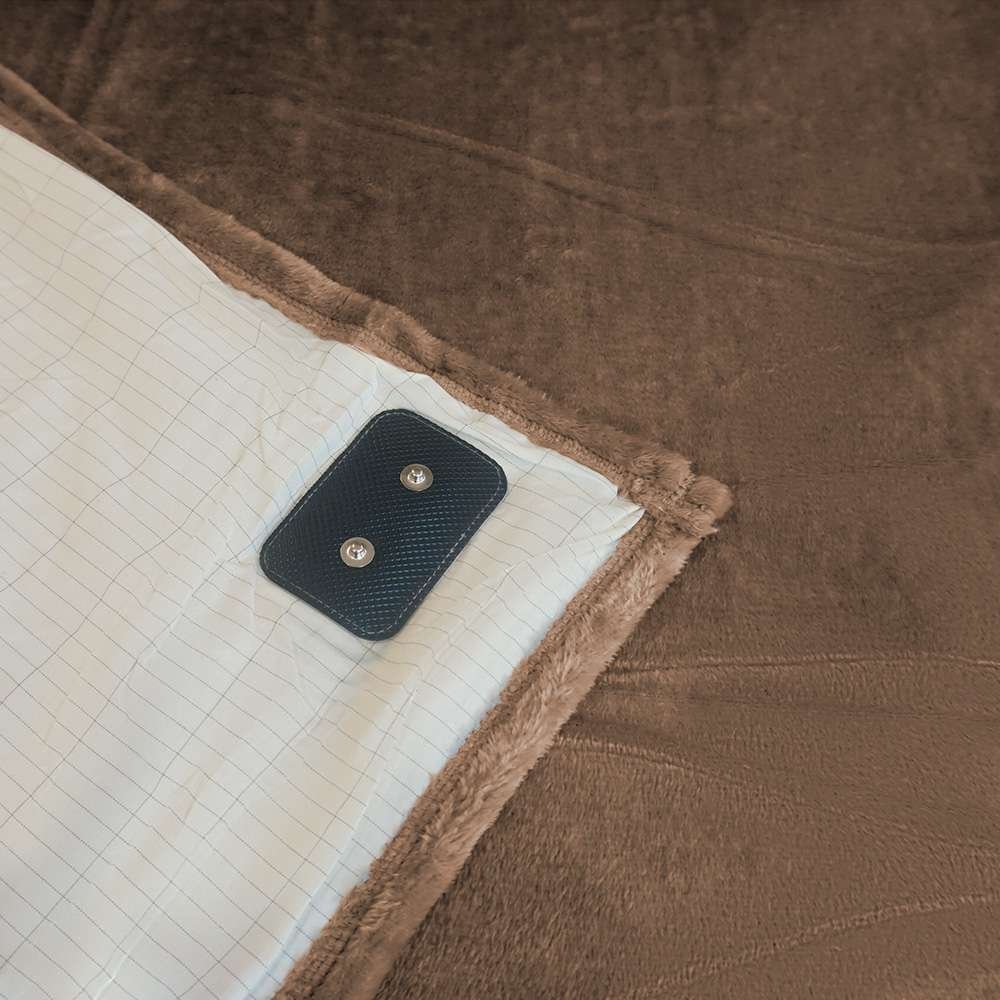
Look beyond the surface
Approve the construction customers will receive.
Check the outer textile, conductive layer, edge finish and connector together. Keep the agreed care trial and pack-out in the sample record.
3. How Should Buyers Test Grounding Blanket Conductivity?
Direct answer:
Grounding blanket conductivity testing should evaluate the complete finished product instead of only testing raw conductive fabric.
This is one of the most important steps in grounding blanket sourcing.
A professional quality-control process should not only check the textile material, but also verify the complete connection system.
1. Conductive Textile Testing
Check:
- Conductive material consistency
- Surface resistance
- Material distribution
2. Finished Blanket Testing
The completed blanket should be tested after:
This helps identify production issues that cannot be detected from raw materials alone.
3. Connector and Cord Testing
The connection system should also be checked:
Blanket Fabric
↓
Connector
↓
Cord
↓
Grounding Connection
Potential inspection points include:
- Connector strength
- Installation position
- Cable connection
- Physical durability
Quality Control Recommendation for Importers
Incoming Material Inspection
- Textile material
- Conductive components
- Accessories
Production Inspection
- Cutting
- Sewing
- Connector installation
- Product dimensions
Final Inspection
- Appearance
- Conductivity
- Accessories
- Packaging
- Labels
For a complete importer checklist, see:
Grounding Product Quality Control Checklist for Importers
Resolve the usable face before approving retail instructions
The finished blanket and its instructions should agree on the face and placement the customer will use. Review the sample spread out and draped in that intended position. If a lining, binding or decorative panel is present, identify its role on the drawing and in the sample record.
| What the buyer receives | Question still to resolve | Next approval action |
|---|---|---|
| A material swatch and a fabric resistance record | Which finished blanket face, area and route to the connector are represented? | Request the finished sample and a test-point map tied to its construction before approving the product instructions. |
| A finished blanket photographed on both sides | Do the proposed instructions permit contact with either face, or specify one face? | Match the permitted orientation to the documented construction and measurements. Approve photos and wording that show the supported use. |
| A care result for the specified finished sample | What happened to coverage, layers, seams, connector attachment and the agreed measured route? | Review each result against its agreed criterion and record any care or use limitation in the approved instructions. |
Illustrative approval case. A buyer receives a two-face blanket sample, a conductive-fabric swatch result and an insert that says either side can be used. The supplier has identified only one face in the finished-item record. Hold the insert approval while the supplier clarifies the construction and supplies evidence for the intended contact orientation. If the supported use is one-sided, approve a consistent one-sided description, sample and photo set before release. This is a hypothetical purchasing decision.
For a washable version, agree the complete wash-and-dry sequence and evaluate the identified finished blanket. The public scope of ISO 6330:2021 describes domestic textile washing and drying procedures and notes that parameter choices can affect results. Ask for the actual results and acceptance criteria as well as the named method. Use the grounding textile care guide to define the full record.
4. Grounding Blanket vs Grounding Sheet: Which Product Should Brands Launch First?
Direct answer:
Grounding blankets and grounding sheets serve different market purposes. The better choice depends on the brand strategy, target customer, inventory plan, and product positioning.
For wholesale buyers, choosing between these two categories requires understanding how each product fits into a broader grounding product collection.
| Comparison | Grounding Blanket | Grounding Sheet |
|---|---|---|
| Intended use to define | Draped or covering format, with the permitted contact face specified | Flat contact coverage or fitted mattress use, as selected |
| Size Complexity | Depends on coverage sizes, layer options and variants | Depends on flat or fitted format and target mattresses |
| Material Usage | Quote the actual layers, finished dimensions and packed volume | Quote the actual flat or fitted construction and packed volume |
| Retail Positioning | Validate the proposed positioning with the target channel | Validate the proposed bedding use with the target channel |
| Bundle Opportunity | Confirm compatible accessories and complete pack cost | Confirm compatible accessories and complete pack cost |
When Grounding Blankets Make Sense
A grounding blanket can work well for brands that want:
When Grounding Sheets Make Sense
Grounding sheets may be stronger for brands focused on:
- Core sleep products
- Mattress-based applications
- Multiple size options
- Bedding collections
Many brands eventually combine both categories:
Grounding Sheet
+
Grounding Pillowcase
+
Grounding Blanket
+
Accessories
Creating a complete product ecosystem allows brands to serve different customer groups and purchasing needs.
5. What OEM Customization Options Are Available?
Direct answer:
Private-label grounding blanket projects can include customization across materials, dimensions, branding, packaging, and accessories.
Product Customization
- Fabric selection
- Blanket size
- Color
- Edge design
- Construction details
Branding Customization
- Logo
- Labels
- Packaging artwork
- Product inserts
- Instructions
Accessory Customization
- Grounding cords
- Connector types
- Plug configurations
- Regional versions
Packaging Customization
- Retail packaging
- Barcode labels
- Carton markings
- Shipping packaging
OEM Grounding Blanket Development Process
A reliable supplier should support each stage rather than only provide finished products.
What Should Buyers Confirm Before Bulk Orders?
Before approving a grounding blanket order, buyers should confirm:
Product
- Material composition
- Blanket dimensions
- Construction
- Color
- Weight
Conductive System
- Testing method
- Acceptance criteria
- Connector
- Cord
- Grounding accessories
Branding
- Logo
- Labels
- Instructions
- Packaging
Production
- Sample approval
- QC standard
- Inspection process
- Repeat-order consistency
International Labeling Considerations
The FTC textile and wool labeling guide includes blankets among covered U.S. household textiles. It explains generic fiber names and fiber-weight disclosures, with specific treatment for components such as linings and fillings. Review which material statement covers the whole article and which refers to an identified component.
Ask the destination-market reviewer to check the finished-product fiber description, responsible-company and origin information, relevant care wording and product claims before printing. Keep the approved label with the blanket construction revision and its evidence.
Frequently Asked Questions About Grounding Blanket Sourcing
What materials are commonly used for grounding blankets?
Confirm the quoted outer textile, conductive construction and any backing or fill. Verify the actual generic fiber names and the composition basis for each statement.
Can grounding blankets be private labeled?
Yes. OEM projects may include custom sizes, materials, colors, labels, packaging, accessories, and branding.
How should grounding blanket conductivity be tested?
Testing should evaluate the finished blanket, connector, cord, and complete grounding system rather than only raw fabric.
What is the difference between a grounding blanket and a grounding sheet?
Compare the intended placement, coverage, contact face and construction. A blanket may be draped or used as a cover, while a sheet may be flat or fitted. Set the retail position from the actual offer and target channel.
Can manufacturers provide custom packaging?
Yes. Private-label projects can include customized retail packaging, labels, instructions, and branding materials.
Should buyers order samples before production?
Yes. Sample approval allows buyers to confirm materials, dimensions, workmanship, conductivity, and packaging before bulk manufacturing.
Can customers use either side of a grounding blanket?
Use the orientation supported by the identified construction, finished-sample evidence and supplied instructions. Review both faces before using two-sided wording or photography.
What should a blanket care record identify?
Identify the finished sample, treatment sequence and checkpoints. Include coverage and construction observations, connector checks and the agreed electrical results. Match the approved instructions to those conditions.
Grounding Blanket OEM Manufacturing with ECOBRIDGE
ECOBRIDGE supports international buyers developing grounding blanket and conductive textile products.
OEM and ODM services can include:
More about ECOBRIDGE manufacturing capability:
ECOBRIDGE Grounding Products Manufacturer
Final Recommendation for Grounding Blanket Buyers
Successful grounding blanket sourcing requires more than choosing a supplier based on price.
A reliable project should define:
Material
Construction
Conductivity
Connector
Accessories
Branding
Packaging
Quality Control
before production begins.
For importers, distributors, and private-label brands, choosing a manufacturer with conductive textile experience can improve product consistency and long-term supply stability.
ECOBRIDGE works with global buyers developing grounding products including sheets, pillowcases, blankets, mats, and accessories through OEM and private-label manufacturing programs.
Request OEM / Wholesale Information