
Grounding Mat vs Grounding Sheet: Differences for Buyers
Choose a grounding mat for a defined desk, floor or portable contact area; choose a grounding sheet for a bedding range that needs textile feel and bed-specific coverage. A bed-sized mat is a third configuration to assess, not automatically a washable sheet. For wholesale and private-label buyers, the useful comparison is the complete product in its intended setting: surface, fit, connector, approved cord, care process and retail pack.
This guide helps importers, distributors and brands select a first SKU or a coordinated range. It compares product formats and the evidence needed to approve them. “Grounding” and “earthing” in a catalogue do not define the construction or establish suitability for an installation. Neither a larger surface nor a lower resistance reading demonstrates a stronger health benefit.

Choose by placement
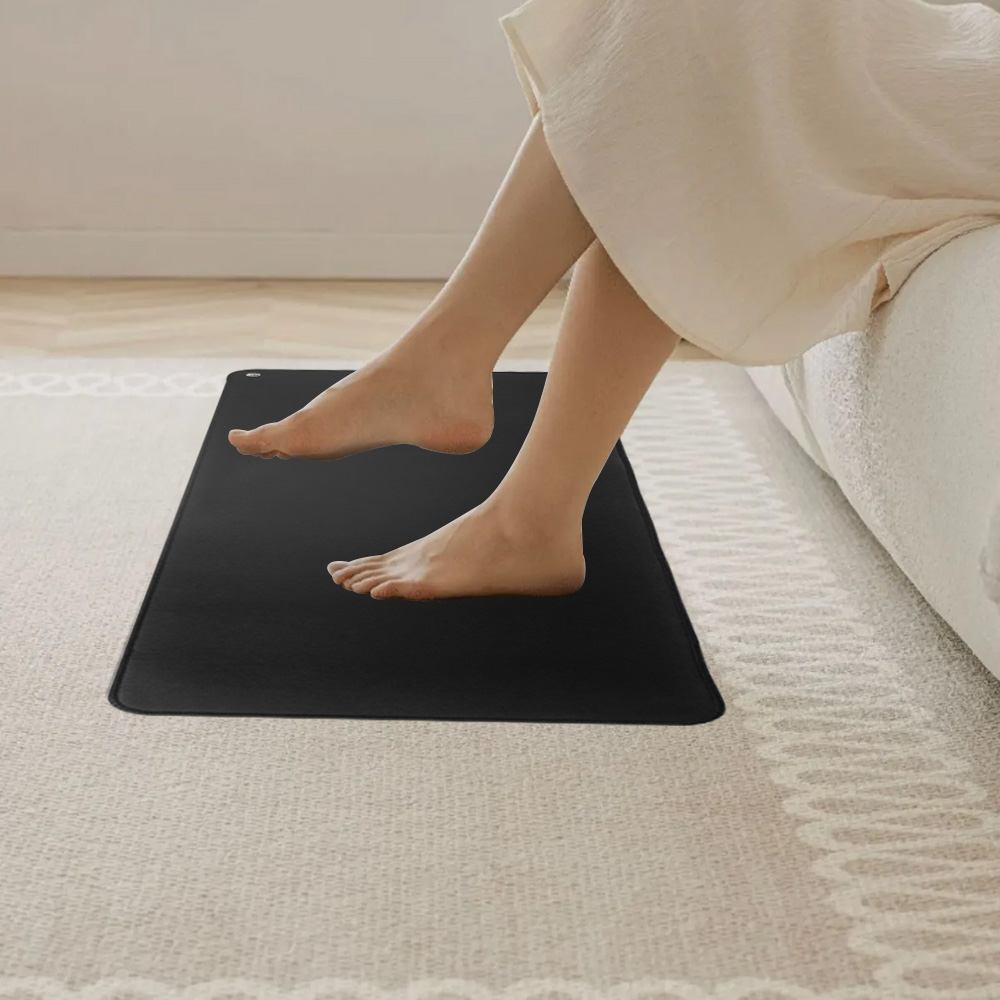
A contact area. Or a bedding format.

Grounding sheet
Define the bed coverage, textile construction and finished dimensions.
Grounding Mat vs Grounding Sheet: The Core Differences
The primary difference between a grounding mat and a grounding sheet is the product format and placement. A mat can be a compact desk or floor surface, although larger bed-sized mats also exist. A sheet is constructed as bedding and needs the fit, feel, laundering instructions, and retail presentation expected of a textile used on a bed. Material and electrical details vary within both categories, so buyers should compare specific specifications rather than names alone.
Open the detailed mat and sheet comparison
| Decision point | Grounding mat | Grounding sheet |
|---|---|---|
| Typical placement | Desk, floor, chair area, or another defined contact surface; some mats are bed-sized | Bed, commonly as a flat or fitted textile |
| Common construction | May use conductive textiles or a conductive PU-based surface, depending on model | Usually a textile structure with conductive fibers integrated into the fabric |
| Customer expectation | Portable use, surface contact, and convenient storage | Bedding comfort, correct bed fit, and laundering guidance |
| Care decision | Depends on the material: wipe-clean and fabric models require different instructions | Wash and dry instructions must suit the actual conductive fabric and trims |
| Buyer specification | Use area, surface, backing, edge finish, connector location, and cord routing | Fabric composition, dimensions, construction, connector placement, and wash protocol |
These are format-level distinctions, not universal performance rankings. A bed-sized PU product, for example, may be called a “sheet” in a catalog while behaving more like a mat in care and handling. The purchasing specification should describe the actual construction.
What Changes When the Conductive Surface Changes?
Conductivity means that a material permits electrical charge to move through a defined path. The word does not specify how the surface was made or how it performs after repeated use. ECOBRIDGE lists cotton or bamboo-based silver-fiber options on its grounding mat product page and grounding sheet product page. Its separate PU earthing mat range uses a PU and carbon-fiber construction. Buyers should therefore avoid assuming that every mat is rubber-like or every sheet has the same fiber blend.
Silver fiber is textile fiber with a conductive silver component. Carbon-based conductive material can be incorporated into a different surface construction. PU, or polyurethane, describes a polymer material family; a PU label by itself does not prove that the finished contact surface is conductive. The conductive layer or network, its connection to the snap, and the finished-product test method should be documented for the selected model.
For a fabric sheet, assess hand feel, fabric stability, seam quality, and the stated cleaning process alongside conductivity. For a mat, examine the contact face, backing, edge finish, and resistance to the wear expected at its intended placement. A wipe-clean PU mat may suit a desk program; a soft textile may better fit a bedding collection. Those are merchandising and maintenance choices, not evidence that one format delivers stronger health effects.
The Connection System Matters as Much as the Surface
Both formats depend on an unbroken intended connection from the contact surface through the connector and cord to an appropriate grounding point. A snap connector is the detachable metal contact often used where a grounding cord joins a product. A cord that physically fits a snap is not automatically approved for every SKU: dimensions, retention, construction, and any specified electrical characteristics must match the finished product design.
For buyers, the practical comparison is not just mat versus sheet. It is mat plus its approved accessories versus sheet plus its approved accessories. Record the connector position, cord length, plug or grounding accessory version, instructions, and replacement-part identity on the sample approval sheet. If several products share one accessory, confirm that compatibility by specification and finished-product testing rather than appearance.
Our grounding cord and plug guide covers regional accessory decisions in more detail. A buyer serving several countries should identify each destination before approving packaging and instructions; “international plug” is too vague for a purchase order.
Which Format Fits the Customer’s Use Case?
Choose a mat when the customer needs a defined surface at a workstation, on a floor, or as a portable accessory. Choose a sheet when the purchase is specifically for bedding and the customer expects a textile sized for a mattress. If the brand serves both work and bedroom settings, the two formats can form distinct SKUs rather than competing versions of the same item.
For a desk or flexible-use range
Specify the usable contact area before choosing an overall size. A larger mat may still have a smaller intended conductive zone, depending on its design. Confirm how it lies on a desk or floor, whether its edges interfere with normal use, where the cord exits, and how the item is stored. A retail kit should show the intended placement clearly; a lifestyle photo must match the supplied construction.
For a bedding range
Start with mattress dimensions and whether a flat or fitted construction is required. Check fabric feel, shrinkage allowances, seam placement, connector position, and whether the cord can be routed without pulling on the connection in normal use. Care instructions must be validated for the chosen fabric and finished assembly. A textile that feels suitable as a sample still needs approval after the specified wash process.
The comparison becomes especially important for private-label ranges. A mat may be a simpler entry SKU for a brand testing desk use, while a sheet can align with an established bedding assortment. Neither route removes the need for a controlled sample, clear instructions, and accessories matched to the target market.
Compare the buying situation before comparing unit prices
Consider a hypothetical brand choosing between a compact desk mat, a bed-sized PU mat and a fitted textile sheet. All three may have a connector and cord, but they create different customer promises. A desk product needs a usable workspace layout. A bed mat needs an approved placement and handling method. A fitted sheet needs a defined mattress fit after the intended care process. Calling all three “grounding bedding” hides those decisions.
| Range being developed | What earns approval | What would hold the decision |
|---|---|---|
| Compact desk or floor mat | The intended contact area and connector remain usable in a representative workspace, with a manageable cord route. | The quoted overall size fits, but the usable area or connector placement interferes with ordinary use. |
| Bed-sized mat | The actual surface, bed placement, retention and cleaning instructions match the retail description. | Photography suggests a soft washable sheet while the supplied construction requires different handling. |
| Textile bedding sheet | The specified mattress or coverage area, care procedure and finished conductive path have been assessed together. | A fabric swatch is supplied without finished-size, connector or post-care evidence. |
This is a sample-review exercise, not a claim about tested ECOBRIDGE configurations. Compare a compact mat and a sheet as different offers if they serve different customers. If two bed products compete for the same shelf position, compare the complete package and its support burden rather than assuming the lower factory unit price is the better range decision.
Care, Packaging, and Returns: The Often-Missed Comparison
Maintenance and after-sales questions differ between grounding mats and grounding sheets. A fabric sheet is likely to enter a customer’s laundering routine, so the buyer needs a tested care instruction and a way to distinguish normal wear from a fault. A PU-based mat may use a wipe-clean process, but its surface and connector still need care guidance for the exact material. Do not transfer instructions from one construction to another.
Use the right care evidence for each construction
ISO 6330:2021 defines domestic washing and drying procedures for textile testing. Its public scope notes that washer, detergent and drying parameters can affect results. For a washable sheet or fabric mat, identify the selected procedure, cycle count and tested finished sample. Then review fit or coverage, appearance, connector condition and the agreed electrical route after care. Naming the standard alone establishes neither durability nor a pass result.
For a wipe-clean PU mat, request evidence for the permitted cleaner and the actual cleaning procedure instead of applying a laundry result from a textile. Conversely, an intact-looking sheet is not enough if its dimensions or conductive route have changed. Reject a comparison that calls one product “lower maintenance” without stating the material and care routine being compared.
Ask the supplier what is included in the retail pack, not merely what appears in a product photograph. A separate cord, plug version, optional outlet tester, instruction card, storage bag, and spare connector can change carton contents and support enquiries. If the product is sold across regions, use distinct accessory and packaging versions where needed. This reduces the risk of a correct surface being shipped with the wrong cord or instructions.
Returns can also reveal a documentation problem rather than a material defect. If customers cannot identify the contact side, connector, intended outlet arrangement, or care method, the listing and insert need improvement. For wholesale buyers, an approved pack-out checklist is part of product quality, not merely a marketing detail.
How Should an OEM Buyer Approve the First Order?
An OEM buyer should approve one complete, testable configuration for each SKU before bulk production. The decision record should connect the intended use to a defined material, dimensions, conductivity test method, connector and cord, market-specific accessory, packaging, and care instructions. A sample of only the conductive fabric cannot verify the performance or usability of the finished retail kit.
- Product role: desk or floor mat, bed-sized mat, flat sheet, or fitted sheet.
- Surface and dimensions: material composition, conductive area, finished size, construction, and tolerances agreed with the supplier.
- Electrical path: measurement method and acceptance criteria for the specified surface and finished assembly; connector and cord compatibility.
- Destination: target country, appropriate accessory configuration, outlet guidance, and required product documentation.
- Retail pack: included components, care insert, language, label, barcode, and any private-label artwork.
- Approval: retained reference sample, bulk inspection checkpoints, and a process for reviewing substitutions.
If a supplier quotes a resistance or conductivity value, request the measurement points, equipment, conditions, and acceptance range. A number without a method is difficult to compare across products. The existing grounding sheet conductivity test guide explains why testing the finished product matters before a bulk order.
IEC 61340-2-3:2016 illustrates why the method needs a defined scope: it addresses resistance and resistivity of solid materials for electrostatic-control purposes. It is not a universal consumer grounding-product pass limit or a health-performance scale. Ask the laboratory whether its selected method fits the actual material and question; a standard name on a fabric report does not approve the whole retail kit.
Keep two decisions distinct. A material test characterizes the sampled surface under its specified conditions. An agreed assembled-path check addresses the selected product, connector and cord. Neither certifies the customer’s building wiring. If a desk mat report gives a surface result and a sheet report measures from fabric to cord, hold the ranking and obtain comparable evidence rather than calling the smaller number better.
Electrical Safety and Claims Need Separate Checks
A mat or sheet sample review does not establish that a building outlet is suitable. Assess the product and its approved accessories separately from installation questions. The actual grounding point, destination configuration and instructions still matter whichever format is chosen.
Electrical Safety First’s Best Practice Guide 8 explains that a plug-in socket tester cannot, by itself, establish that a socket is safe. This UK professional guidance defines an important evidence limit; it does not certify an ECOBRIDGE accessory or provide a consumer installation procedure. Refer uncertain outlet or connection conditions to a qualified electrician. Do not tell customers to open outlets, alter wiring or bypass protective features.
Keep product descriptions separate from health outcomes. The US FTC Health Products Compliance Guidance explains the need for appropriate substantiation of express and implied health-related claims before advertising them. A conductivity result, material description or larger contact area does not supply that health evidence. This guide establishes no medical benefit or comparative sleep outcome, and the FTC guidance is not a product approval or a determination of rules in every market.
Frequently Asked Questions
Can a grounding mat be used on a bed?
Some mats are made in bed-sized formats, but a mat should be used only as its manufacturer specifies. Check its surface, dimensions, connector location, backing, and care instructions before placing it on bedding. A bed-sized PU product does not necessarily have the feel or laundering requirements of a textile sheet. For a retail program, describe it by its actual construction so customers know whether they are buying a mat-like surface or conventional bedding.
Is a grounding sheet always made with silver fiber?
No. Conductive sheets can use different material designs, and the exact construction should be verified for each supplier and SKU. Silver fiber is one option, but its presence alone does not define the complete product’s performance. Buyers should request composition, finished-product testing criteria, wash instructions, and details of how the conductive fabric connects to the cord. Avoid assuming that products with the same broad material name are interchangeable.
Do mats and sheets use the same grounding cord?
They may, but shared use should be confirmed rather than assumed. The snap or other connector must fit and retain properly, and the cord and destination-market accessory must match the approved specification for each product. If one cord is advertised as compatible across a range, document the approved models and test the assembled path for each. Consistent replacement-part naming also helps retailers handle support requests without supplying a merely similar-looking cable.
Which product is easier to include in a first private-label range?
The easier first SKU depends on the brand’s audience and operational capabilities. A brand with a desk-wellness audience may prefer a compact mat; a bedding brand may find a sheet more familiar to merchandise. Compare sample approval, care documentation, packaging volume, accessory versions, and customer support needs before deciding. A first order should use a fully specified kit and retained reference sample, even when the surface design appears straightforward.
Does a lower resistance value mean a better product?
Not by itself. A resistance value is meaningful only with its measurement points, method, conditions, and the product’s approved acceptance criteria. Surface measurements, connector-to-surface checks, and complete-assembly checks answer different questions. Buyers should agree on the test method and compare like with like, then inspect workmanship and accessory compatibility. A single figure cannot substitute for a finished-product specification or an electrical safety assessment.
How should buyers compare samples from two suppliers?
Use the same written requirement for both samples. Record the intended placement, material, dimensions, contact area, construction, connector, cord, target-market accessory, care process, packaging, and the test method used for the finished product. Note any differences in measurement conditions rather than ranking unmatched numbers. Ask each supplier to identify substitutions before production and retain an approved reference sample for later inspection.
Sources and what they establish
The four external documents linked in this guide support different decisions. ISO 6330’s public scope defines textile-care procedures; IEC 61340-2-3’s public scope defines a class of material measurements; Electrical Safety First’s Guide 8 explains socket-tester limitations; and the FTC guidance addresses health-related advertising substantiation. None is an ECOBRIDGE model test report. The comparison table and sample scenarios are procurement guidance, not measured comparative performance.
Make the Format Decision Before the Material Decision
A grounding mat and a grounding sheet can both provide a designed conductive contact surface, but they serve different placement and merchandising needs. Start with where the customer will use the product and what they expect to touch, clean, and store. Then compare materials and approve the complete connection system, instructions, and pack-out for that format. A desk mat, a bed-sized mat, and a fitted textile sheet should not be treated as one interchangeable specification.
For an OEM or wholesale project, request actual samples of the configurations under consideration and review each as a finished retail product. ECOBRIDGE develops grounding mats and sheets for wholesale and private-label programs. Buyers can compare available constructions and discuss the material, connector, accessory, and packaging requirements for their intended market before placing a bulk order.