
GROUNDING PRODUCT FUNDAMENTALS
What Is an Earthing Product? A B2B Buyer’s Guide
In consumer bedding and accessories, an earthing product is a sheet, mat or similar item designed to connect a conductive contact surface to an appropriate ground through compatible connection accessories. This guide covers that product category for wholesale buyers. The name alone does not tell a buyer the material, included parts, test results or suitability for a particular application.
What makes an earthing product different from ordinary bedding?
An ordinary sheet or desk pad can be specified by its fabric, dimensions, feel and care requirements. A consumer earthing product adds an intended conductive connection. Its specification therefore needs to identify both the contact surface and the route from that surface through the connector and supplied cord.
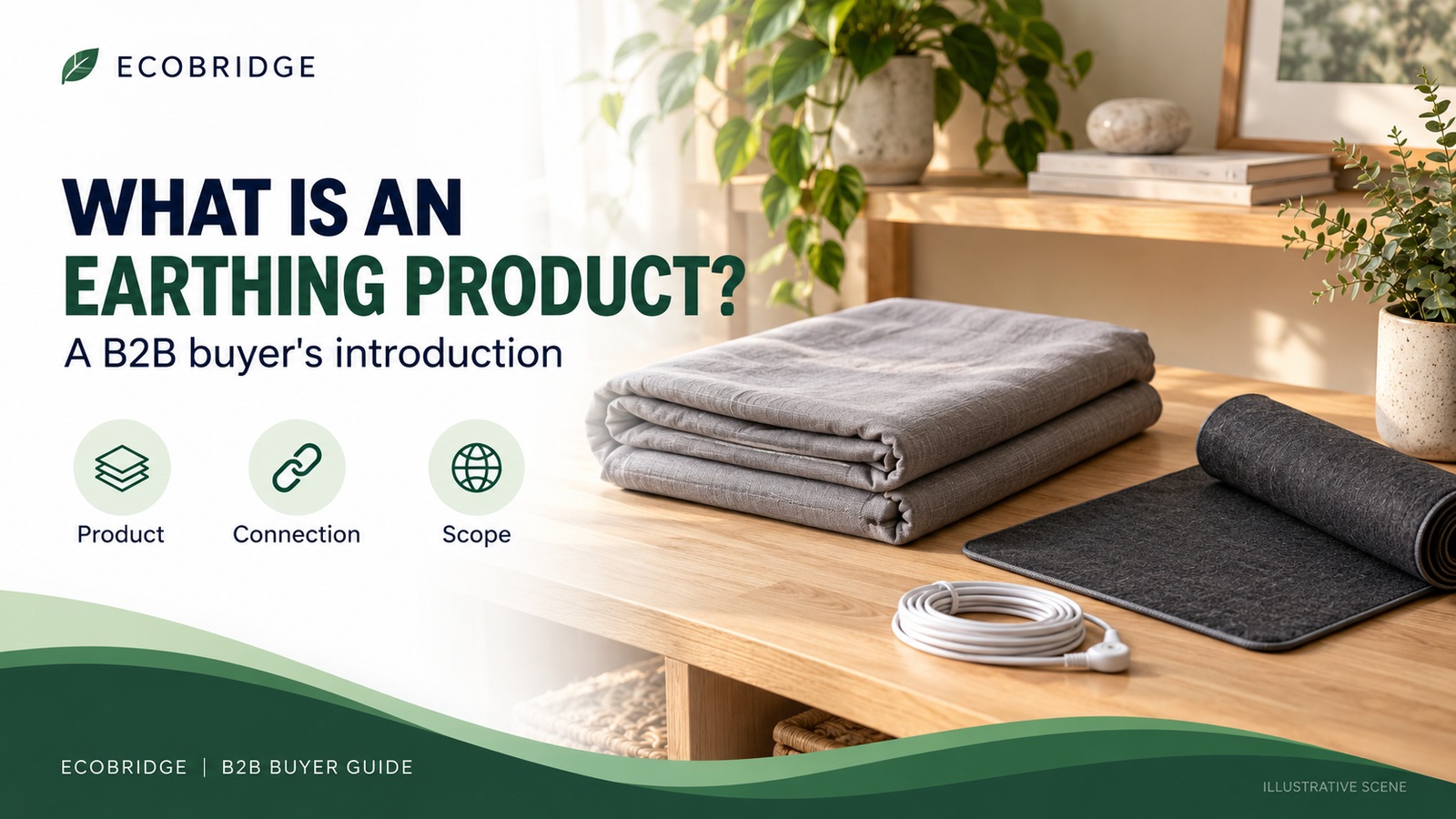
For example, a textile may combine a base fiber with a conductive component; a mat may have a specified contact face and backing. Ask which part is intended for contact, where the attachment point sits and which accessories belong to the ordered configuration. A photograph of a folded sheet does not resolve those details.
Which product format fits the buyer’s application?
Choose a format from the intended placement and contact area before comparing quotations. The following are purchasing questions, not universal performance rankings.
| Format and intended placement | What to define before approval |
|---|---|
| Flat grounding sheets or fitted bedding | For a flat contact sheet, specify its usable area and placement. For fitted bedding, record mattress width, length, pocket depth, retention and connector position. A flat-sheet dimension is not a mattress-fit specification. |
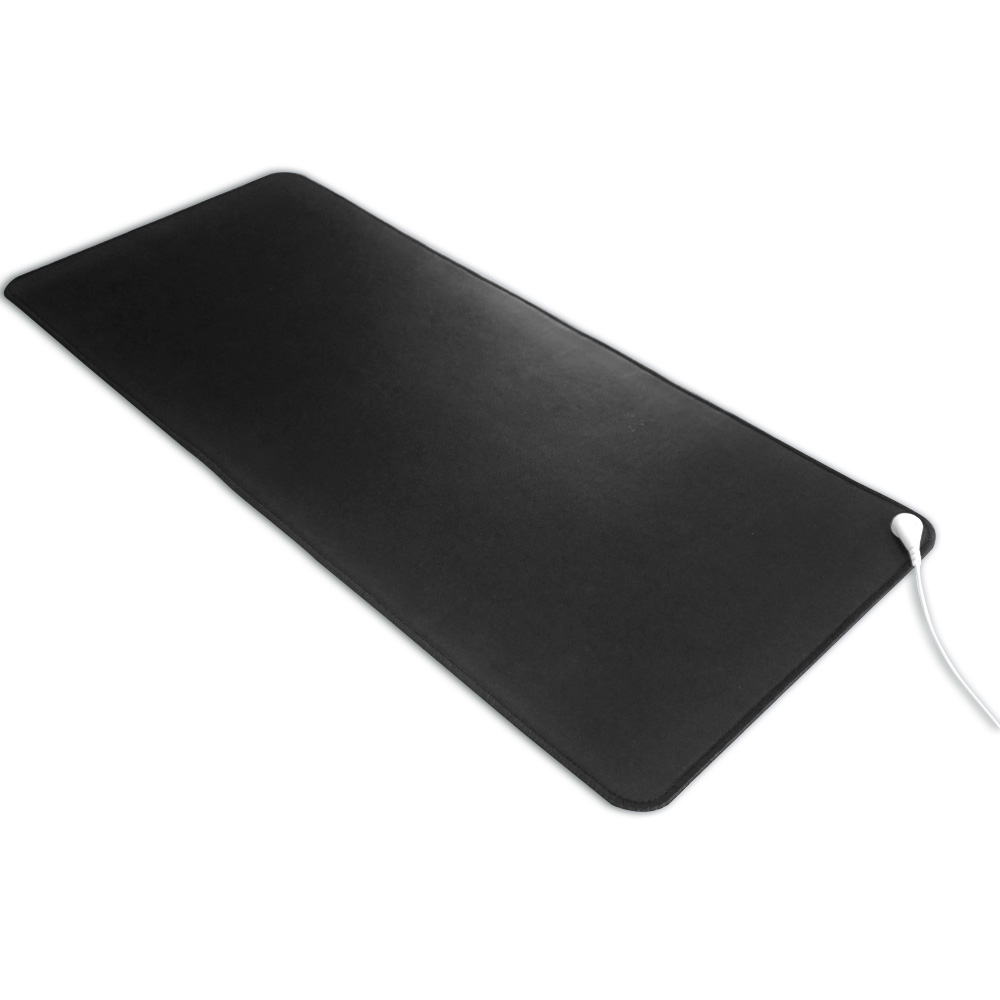
| Grounding mats for a defined desk, floor or bedside setting | Identify textile or other surface construction, contact face, finished dimensions, cleaning instructions and the cord route. Review the proposed sample in that setting rather than assigning an application from size alone. |
| Pillowcases, blankets and coordinated packs | Define the actual contact area, care procedure and included accessories. An assortment name does not establish that every item uses the same material or mating connector. |
For an assembled retail pack, list the main item, cord, connector or adapter, any checking tool, instructions and packaging separately. An accessory catalogue such as our grounding connection range can identify options to discuss; confirm the parts included in the quotation in writing.
Is a consumer grounding mat the same as an industrial ESD mat?
Do not approve one as a substitute for the other based on the word “grounding.” Electrostatic discharge, or ESD, control in electronics has a distinct purpose: protecting sensitive parts and equipment. The publisher’s description of ANSI/ESD S20.20-2021 concerns an ESD control program with administrative and technical requirements. It is not evidence that a consumer bedding or mat model meets that program’s requirements.
If the actual application is an electronics assembly bench, give the purchasing brief to the facility’s ESD coordinator and request evidence against that facility’s defined requirements. If the application is a home-use contact mat, assess that identified product and its instructions. A shared connector shape or conductive surface does not establish interchangeability.
Hypothetical buying example: a distributor receives a proposal headed “grounding mat” with only a photograph and a fabric reading. Before adding it to either a home-accessory catalogue or an electronics-workbench catalogue, the distributor must establish which application the proposal actually covers. Missing application evidence is a reason to clarify the proposal, not proof that the product is defective or that either use has been validated.
How should buyers review the complete connection?
Describe the intended path in the order specification: contact surface → attachment point → compatible cord → specified ground connection. Request the mating connector details, cord configuration, approved ground connection and instructions for the destination market. Do not treat a plug-shaped accessory as proof of the condition of a particular installation.
Agree which checks concern the material, which concern the assembled item and which concern the installation. Questions about building wiring or an uncertain grounding point belong with a qualified electrical professional. This purchasing guide does not provide instructions for modifying a receptacle or constructing a grounding connection.
Our grounding cord and plug buying guide covers accessory questions in greater depth. Use it after identifying the product format; keep the selected cord and instructions tied to the same ordered configuration.
What does a material or electrical report actually establish?
Begin with the test object and method, not just a result labeled “pass.” A record should identify the specimen or model, measurement being reported, setup, conditions, units and acceptance basis. These are recommended questions for reviewing an offer; they do not imply that a particular test is mandatory for every consumer earthing product.
For a concrete scope example, the public abstract for ISO 24584:2022 describes a non-contact method using eddy-current technology to determine sheet resistance in conductive textile structures. That defined material measurement does not, by itself, assess a finished sheet’s snap, supplied cord or installed ground path. Citing the standard’s name is also not evidence that the offered sample was tested to it.
| Evidence supplied | Buyer interpretation and next question |
|---|---|
| Material composition record | It can identify documented fibers or layers. Ask whether the record applies to the offered construction and how the conductive component is described. It does not establish the assembled connection. |
| Electrical measurement on a fabric swatch | Interpret the reported property under that method and setup. Ask for the actual specimen identity and the evidence covering the finished connector and cord; do not extend a swatch result to the complete pack. |
| Check on an assembled sample | Ask which parts and measurement points were included, and retain the result with the sample revision. It does not establish the condition of every future installation or demonstrate a health outcome. |
| Care or durability statement | Ask which finished construction and care procedure the supporting record covers, including any electrical recheck. Do not insert an unsupported wash-life figure into the retail description. |
Agree product-specific acceptance criteria with the relevant technical reviewer before using results to release an order. Do not copy a resistance threshold from an industrial ESD application into consumer bedding simply because both products involve grounding.
How should textile materials be described?
Request the base fiber, conductive component, composition basis, construction and care instructions. Distinguish a plant source from the actual finished fiber name. In the United States, the FTC’s bamboo-textile guidance explains that manufactured rayon derived from bamboo should use an appropriate generic fiber description, such as rayon or rayon made from bamboo, rather than simply bamboo. A genuine mechanically processed bamboo-fiber claim needs supporting evidence.
This U.S. naming guidance does not identify the composition of an ECOBRIDGE model. Obtain the records for the selected product and review the destination’s requirements. For a fuller material discussion, see our cotton and bamboo-based grounding sheet comparison.
Does an electrical reading substantiate health advertising?
No. A product’s electrical measurement does not measure sleep, pain, inflammation or another clinical outcome. In U.S. advertising, the FTC’s Health Products Compliance Guidance explains that objective claims need adequate support before advertising, including claims conveyed by implication; health-benefit claims generally need competent and reliable scientific evidence.
As a buyer’s review step, separate the product specification from proposed benefit language. Identify the exact claimed outcome, product, intended users and conditions, then have the supporting evidence assessed for that claim. Neither the FTC guidance nor a textile test establishes a benefit for the product in your quotation. This guide does not make a medical-effectiveness claim or determine regulatory classification in every market.
What should go into the first-order brief?
- Define the use: intended customer, setting, contact area and destination market. Separate consumer use from any industrial ESD application.
- Identify the ordered item: format, dimensions, construction, material records, connector and accessories. State whether packaging, labels and instructions are included.
- Set the review basis: approved sample, agreed checks and acceptance criteria, care instructions and evidence for the exact proposed claims.
- Resolve differences before approval: reconcile the sample, quotation, test records and retail artwork. Mark optional private-label requests separately so that a desired color or custom pack is not mistaken for a confirmed inclusion.
Retain the agreed specification and an identified reference sample. If the proposed surface, connector or cord changes, review the affected evidence before accepting the revision. A lower quotation is meaningful only when its contents and approval basis are clear.
Frequently asked questions
Can a supplier’s fabric report cover several finished products?
It may be relevant to products using the documented material, but relevance must be checked. Ask which constructions and revisions it covers, and obtain separate evidence for features outside its scope, such as different connectors or cords.
Does selling a product as a kit make the ground connection suitable everywhere?
No. A kit describes supplied contents. Confirm the destination-specific configuration and instructions; it does not resolve an unknown installation. Escalate uncertain wiring or grounding conditions to a qualified professional.
Can the same instruction leaflet be reused across sheets and mats?
Only after checking that the described placement, connection, contact face and care procedure apply to each identified product. Similar branding does not establish identical construction or care.
Which product should a new private-label range start with?
Start with the format that matches a clearly defined customer use and that you can specify and support. Compare the approved sample, pack contents, labeling and evidence before expanding the assortment; this guide does not rank one format as universally better.
Discuss an identified product configuration
Share your intended use, destination, format, dimensions, quantity and accessory requirements with the ECOBRIDGE team. Ask for the proposed construction and supporting records before approving your order.